




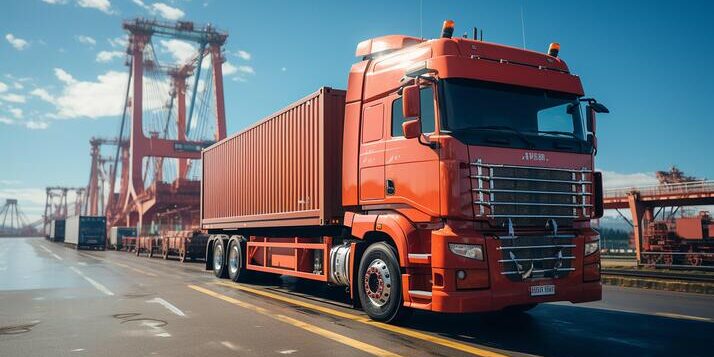
From last-mile gridlock to cross-border tariff disruptions: How global e-commerce businesses can navigate America’s complex logistics landscape in 2026 and beyond.
The United States moves more packages than any country on earth. Americans shipped 22.37 billion parcels in 2024 and that number keeps climbing. Yet behind every cardboard box and two-day delivery promise sits a transportation system under enormous pressure, strained by surging e-commerce volumes, aging infrastructure, a shifting regulatory landscape, and the most significant tariff disruptions in a generation.
At Synmerce Global LLC, we operate at the intersection of global sourcing and U.S. market delivery every single day. We understand what works, what breaks, and what is changing fast. This analysis is written for e-commerce sellers, importers, brand owners, and logistics professionals who want an honest, informed view of where American logistics stands today and where it is headed.
1. The Scale of U.S. E-Commerce Logistics
The American e-commerce market is the world’s second largest and its logistics network is unmatched in density and sophistication. Yet scale itself is a source of pressure. Consumer expectations shaped by Amazon’s relentless investment in speed have created a delivery standard that is simultaneously raising the bar for every seller and compressing the margin for every carrier.
The last-mile delivery segment alone the final movement from a local hub to a customer’s door is now valued at approximately $201 billion globally, growing at a 12% compound annual rate. North America commands over 37% of that market. These numbers are impressive, but they mask a system under genuine stress.
3. The Tariff Earthquake: A Deeper Look
The tariff landscape deserves particular attention because its consequences extend well beyond import costs. Tariffs reshape how goods move, where they are sourced, how they are priced, and which business models remain viable.
The ripple effects are significant. Sellers who built their businesses around the de minimis exemption shipping small packages directly from Chinese warehouses to U.S. consumers have seen their entire cost model invalidated overnight. Those sourcing from alternative Asian markets such as Vietnam, India, or Bangladesh are also affected, as new tariff structures have placed mid-to-high duties on goods from these countries as well.
The broader implication for the U.S. transport system is real. As customs clearance requirements intensify and de minimis processing channels narrow, cross-border parcels face longer dwell times at ports of entry, higher brokerage costs, and greater documentation burden. For logistics providers and sellers alike, customs compliance has moved from a background function to a front-line business capability.
4. Where Innovation Is Fighting Back
The challenges above are real but so is the response. The U.S. logistics ecosystem is investing heavily in technology, infrastructure, and new delivery models to improve efficiency and lower the cost of serving a demanding e-commerce market.
Drone delivery is scaling beyond pilot programs. Walmart’s partnerships with Zipline and Wing, alongside Amazon’s own delivery drone programs, are extending coverage to suburban and semi-rural areas previously uneconomical to serve via traditional ground routes. Autonomous ground vehicles are entering urban pilot programs in multiple cities, promising to reduce the labor intensity of last-mile delivery without the airspace constraints of drones.
AI has moved from a supporting tool to the operational core of last-mile logistics management. Amazon achieved a 40% cost reduction in its logistics operations by 2025 through predictive modeling, reaching 98% on-time accuracy. Walmart narrowed the logistics gap using AI-human hybrid models, achieving a 45% increase in delivery speed. For smaller operators, AI-powered route optimization platforms are now accessible as SaaS tools, enabling independent sellers and third-party logistics providers to compete with enterprise-scale efficiency.
USPS is currently operating more than 2,600 electric vehicles for mail delivery, with major carriers all accelerating EV fleet deployment to reduce fuel costs and meet tightening emissions standards. While EVs offer meaningful long-term operating cost reductions, charging infrastructure and route planning remain active challenges, particularly in rural and suburban markets where charging density is lower.
U.S. locker networks are expanding rapidly across retail stores, apartment complexes, and transit hubs. Out-of-home delivery reduces missed deliveries, cuts re-delivery costs, and addresses porch theft one of the fastest-growing pain points in residential e-commerce fulfillment. For sellers, offering locker-based delivery options is becoming a meaningful competitive differentiator.
5. The Synmerce Approach: Navigating the Complexity
As a U.S. based global e-commerce and trade facilitation company, Synmerce Global LLC operates within these challenges every day and has built its operational model specifically to help clients navigate them effectively.
6. Looking Ahead: The 2026 Logistics Horizon
The transformation of U.S. e-commerce logistics is accelerating. The following trajectory points are shaping how sellers, carriers, and platforms need to position themselves.